Care homes

Care home EPC upgrades and 24-hour occupancy

A care home breaks the normal order of play. Hot water and heating run around the clock for people who feel the cold and cannot be moved out while work happens, so the measure that would save most is also the one that is hardest to deliver. The honest plan here starts from what can be done around residents, not from what would score best.

A+ A B REQUIRED C D THIS BUILDING E F G
Band letters as they appear on a non-domestic certificate. Your own bands are on your EPC.

The operator, who is usually also the owner, and who answers to a regulator before an accountant.

Hot water is the load, not lighting

Unlike a warehouse or an office, this building type is dominated by domestic hot water and space heating. Baths, laundry, kitchens and warm corridors run continuously, and the heating set point is higher than a commercial building because the occupants are frail.

That puts the big savings in plant, controls, distribution insulation and hot water storage rather than in lighting. Lighting still goes first, because it is cheap and non-disruptive, but it is a smaller share of this building than of almost any other on this site.

There is no void to work in

Every other building type on this site has a cheap window: a void, a shutdown, a school holiday, a night shift. A care home has none. The building is occupied continuously by people for whom noise, dust, cold and disruption are not inconveniences but risks.

So work gets done room by room as rooms turn over, in short controlled possessions, with infection control and safeguarding running alongside. That is a real cost and it belongs in the quote. A contractor who has not asked how you intend to manage residents has not priced the job.

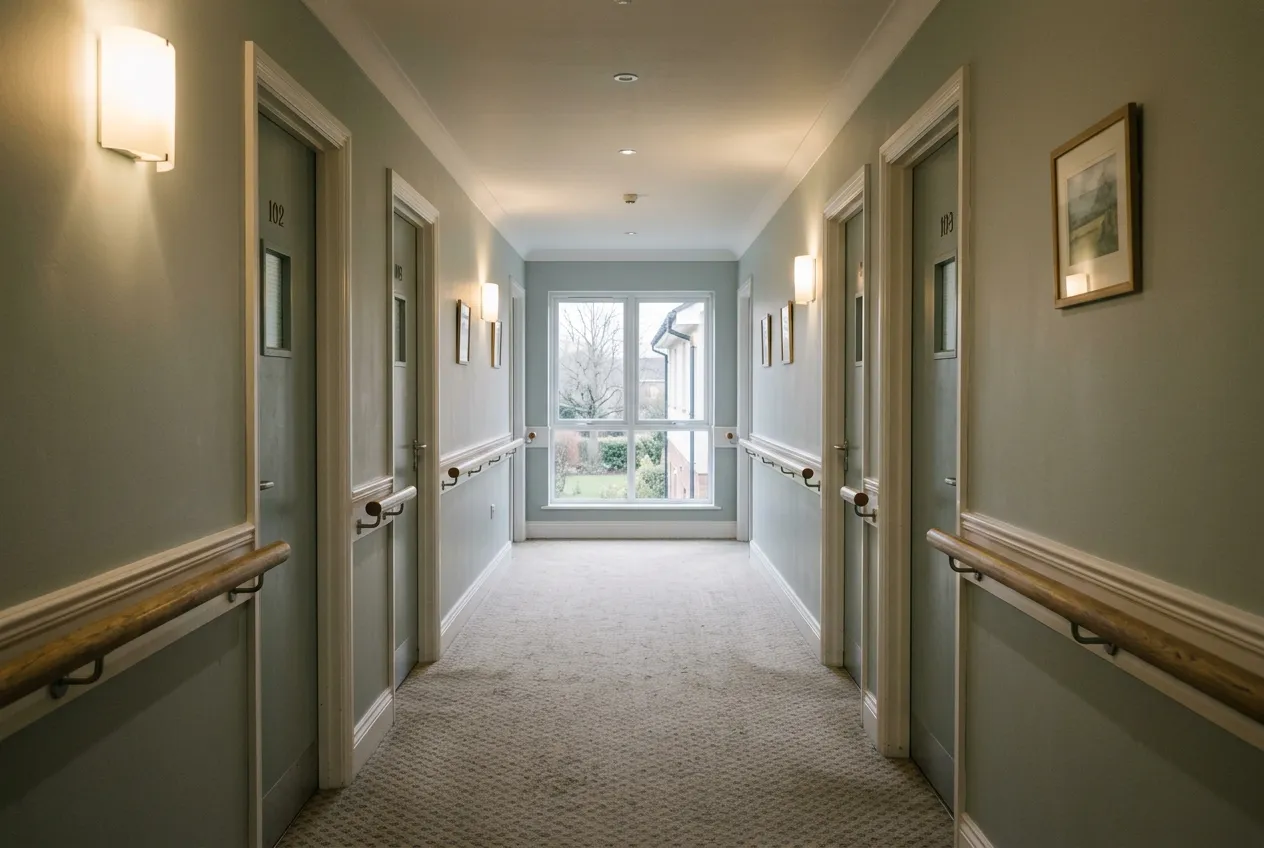
An empty care home corridor with handrails, soft warm lighting and doors to rooms.
Illustrative image generated with AI. Not a photograph of a building we have worked on.

What can usually be done quietly

  • Insulating pipework, valves and hot water storage in plant rooms and risers. Cheap, invisible to residents, and routinely skipped.
  • Heating and hot water controls, zoning and time scheduling, where the existing system is on a crude clock.
  • Corridor, communal and external lighting, which is landlord-controlled space rather than a resident room.
  • Kitchen and laundry extract and equipment, where plant is often older than the rest of the building.

Resident rooms come last and come slowly, as rooms become available.

Comfort is a constraint, not a preference

Lighting changes that would be unremarkable in an office can be a genuine problem here. Colour temperature affects how residents with dementia perceive a space, glare matters more to older eyes, and sudden changes to familiar environments can be distressing.

That argues for warmer colour temperatures, dimmable fittings and a gradual rollout rather than the brightest and most efficient option on the contractor sheet. Efficiency that residents cannot live with gets reversed.

Questions we get asked

Can energy work be done with residents in the building?
Yes, but slowly and in controlled possessions, with infection control and safeguarding alongside. Plant rooms, corridors and communal areas are straightforward; resident rooms are done as they turn over. That constraint is real and belongs in the quote.
What gives the biggest saving in a care home?
Usually heating and hot water rather than lighting, because the building runs warm around the clock and uses a lot of hot water. Insulating distribution pipework and storage, and improving controls, are the cheap end of that.
Will new lighting bother residents?
It can, which is why specification matters more here. Cooler, brighter fittings that suit an office can cause glare and distress for older residents and people living with dementia. Warmer colour temperatures and dimmable fittings are usually the right call.

Last updated .

Next step

Get a quote for your care home

One commercial contractor, quoting off a survey of the actual building rather than a rate per square foot over the phone.

Or call 07367 293494. Monday to Friday, 9am to 5.30pm.

A+ A B REQUIRED C D THIS BUILDING E F G
Call Get a quote