Fluorescent to LED

Fluorescent to LED conversion for commercial use

If your building runs fluorescent tubes you have two separate reasons to deal with them: the tubes are being withdrawn from sale in phases, and the fittings they sit in are usually the cheapest thing in the building to improve. The conversion itself has three routes with very different costs and very different results.

The most common starting point in older commercial stock
A+ A B REQUIRED C D THIS BUILDING E F G
Band letters as they appear on a non-domestic certificate. Your own bands are on your EPC.

The three routes, honestly compared

These all get described as converting to LED, and they are not the same job. The cheapest one is also the one most likely to disappoint.

  • Direct-replacement LED tubes into the existing fitting. Cheapest by a wide margin, fastest, and the weakest result. You keep a reflector and a diffuser designed around a tube that emitted light in every direction, while an LED tube emits it in one.
  • Retrofit conversion kits, where the gear tray inside the fitting is replaced. A middle option. Better optics than a tube swap, cheaper than new fittings, and it keeps the existing housing — which matters if the fittings are architecturally part of the ceiling.
  • Full fitting replacement. Most expensive, and the only route that reliably delivers the full energy saving and the full improvement to the assessment, because the optics, the driver and the output are designed together.

Across all three, lighting energy typically falls by a substantial margin, commonly more than half, but the top of that range belongs to fitting replacement and the bottom to a tube swap in a poor housing.

The compatibility trap

A direct-replacement tube has to work with whatever control gear is already in the fitting, and that is where tube swaps go wrong. Older fittings contain magnetic ballasts; newer ones contain electronic ones; some LED tubes need the ballast bypassed and the fitting rewired, which turns a lamp change into an electrical job.

Getting this wrong produces flicker, early failure, or a fitting that works until the ballast ages. It also voids warranties. If somebody is quoting a tube swap, the compatibility question and who carries the risk on it belong in the quote.

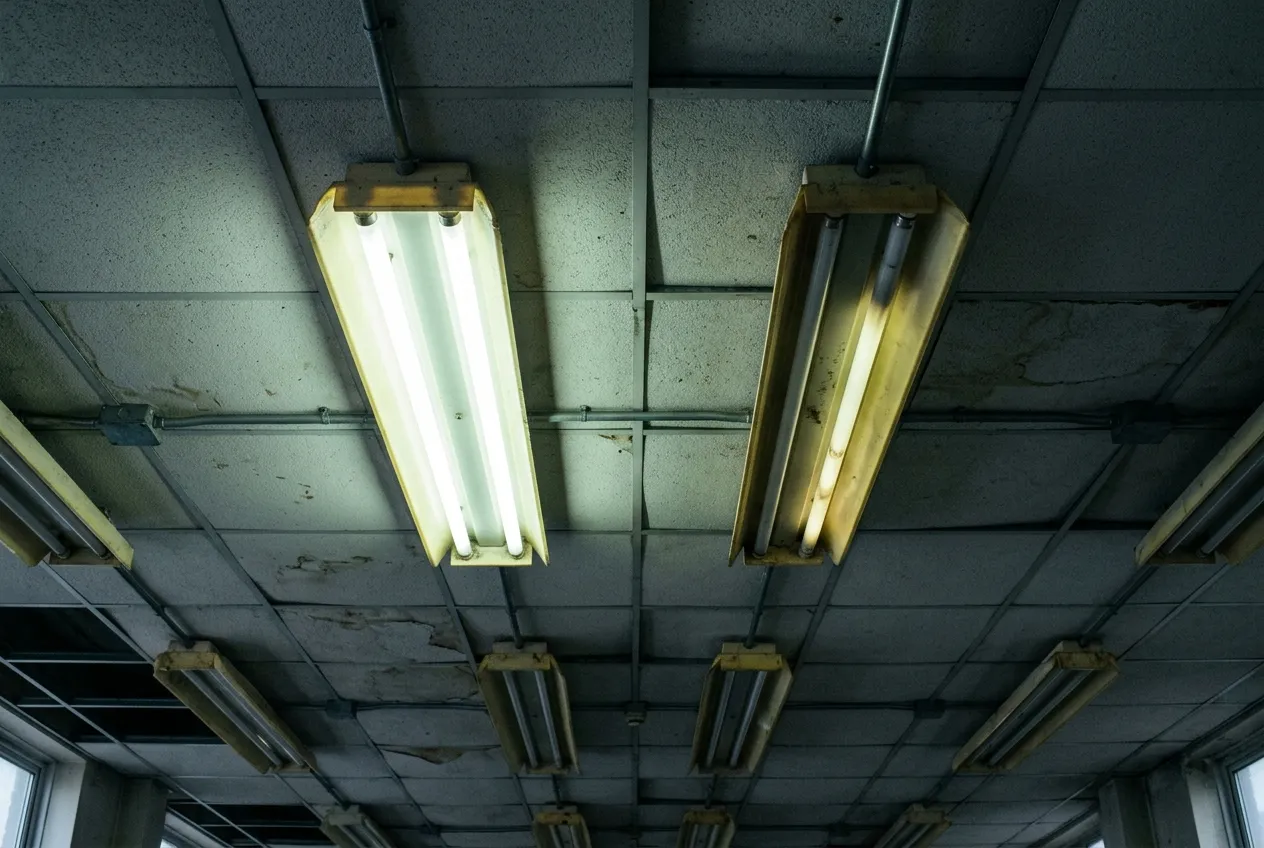
Dated twin fluorescent batten fittings on the ceiling of an older commercial building.
Illustrative image generated with AI. Not a photograph of a building we have worked on.

Why the phase-out matters even if the rating does not

Fluorescent and halogen lamp types are being withdrawn from sale in phases. For a landlord this converts a compliance question into a maintenance one: a building full of tubes faces a point where replacements are harder to source and more expensive, and where a failed fitting is a problem rather than a cupboard item.

Dates differ by lamp type, and the GB and EU timetables diverged, so the honest answer about any particular tube is that it depends which tube it is. The practical answer is that running an estate on a lamp type being withdrawn is a planning problem whichever date applies.

What this does to a certificate

A full fitting replacement changes an installed fixed service, which the assessment reads. A tube swap changes it less, because the modelled efficacy of the installation is lower than the tube on its own would suggest.

If the reason for doing the work is the certificate rather than the maintenance, that gap matters, and it is the argument for spending the extra on fittings rather than tubes.

Questions we get asked

Can I just put LED tubes in my existing fluorescent fittings?
Often yes, but check the control gear. Some LED tubes need the existing ballast bypassed and the fitting rewired, which makes it an electrical job rather than a lamp change. Mismatched gear causes flicker and early failure, and it usually voids the warranty.
Is a tube swap enough to improve my EPC rating?
It helps less than replacing the fittings, because the modelled efficiency of the installation depends on the whole fitting rather than the lamp alone. If the certificate is the reason you are doing the work, fittings are the better spend.
When exactly are fluorescent tubes banned?
Dates differ by lamp type and the GB and EU timetables are not identical, so we will not print one date for all tubes. The practical position is that these lamp types are being withdrawn in phases and planning around them is sensible regardless of which date applies to yours.
What do I do with the old tubes?
They contain mercury and have to be handled as hazardous waste, so disposal is a line in the quote rather than something to assume. Ask who is doing it and whether it is priced.

Last updated .

Next step

Get the conversion priced properly

Tube swap, retrofit kit or new fittings — a contractor can tell you which one your fittings will actually take, and what each would cost.

Or call 07367 293494. Monday to Friday, 9am to 5.30pm.

A+ A B REQUIRED C D THIS BUILDING E F G
Call Get a quote