Lamp swap or new fittings

Lamp swap or fixture replacement: which to choose

Almost every choice on this site is a straight trade between cost and benefit. This one is not. A lamp swap genuinely reduces your electricity bill, and it moves the certificate less than the saving suggests, because a non-domestic EPC is an asset rating of the building and its services, not of your metered use and the thing being modelled is the fitting, not the lamp in it.
A+ A B REQUIRED C D THIS BUILDING E F G
Band letters as they appear on a non-domestic certificate. Your own bands are on your EPC.

Why the certificate and the bill disagree here

Put an efficient lamp into an old fitting and the lamp draws less power. Your meter notices immediately. But the assessment is looking at the installed luminaire: its optics, its control gear and how efficiently it delivers usable light into the space. An old housing built around a tube that threw light in every direction wastes a good part of what a directional LED lamp produces.

So the two measures move apart. The bill responds to the watts. The rating responds to the installation. If your reason for doing the work is the bill, a lamp swap is defensible. If your reason is a compliance deadline, it is the expensive way to be disappointed.

The three options, honestly

  • Lamp swap. Cheapest, fastest, least disruptive. Real bill saving, weakest certificate movement, and it inherits whatever condition the existing housing and gear are in.
  • Gear tray conversion. The innards of the fitting are replaced and the housing stays. Middle cost, much better optics than a lamp swap, and it keeps fittings that are architecturally part of a ceiling.
  • Full fixture replacement. Most expensive, most disruptive, and the only route that reliably delivers both the full saving and the full rating movement, because the optics, driver and output are designed together.

Across all three, lighting energy typically falls by a substantial margin, commonly more than half. The top of that range belongs to fixture replacement and the bottom to a lamp swap in a poor housing.

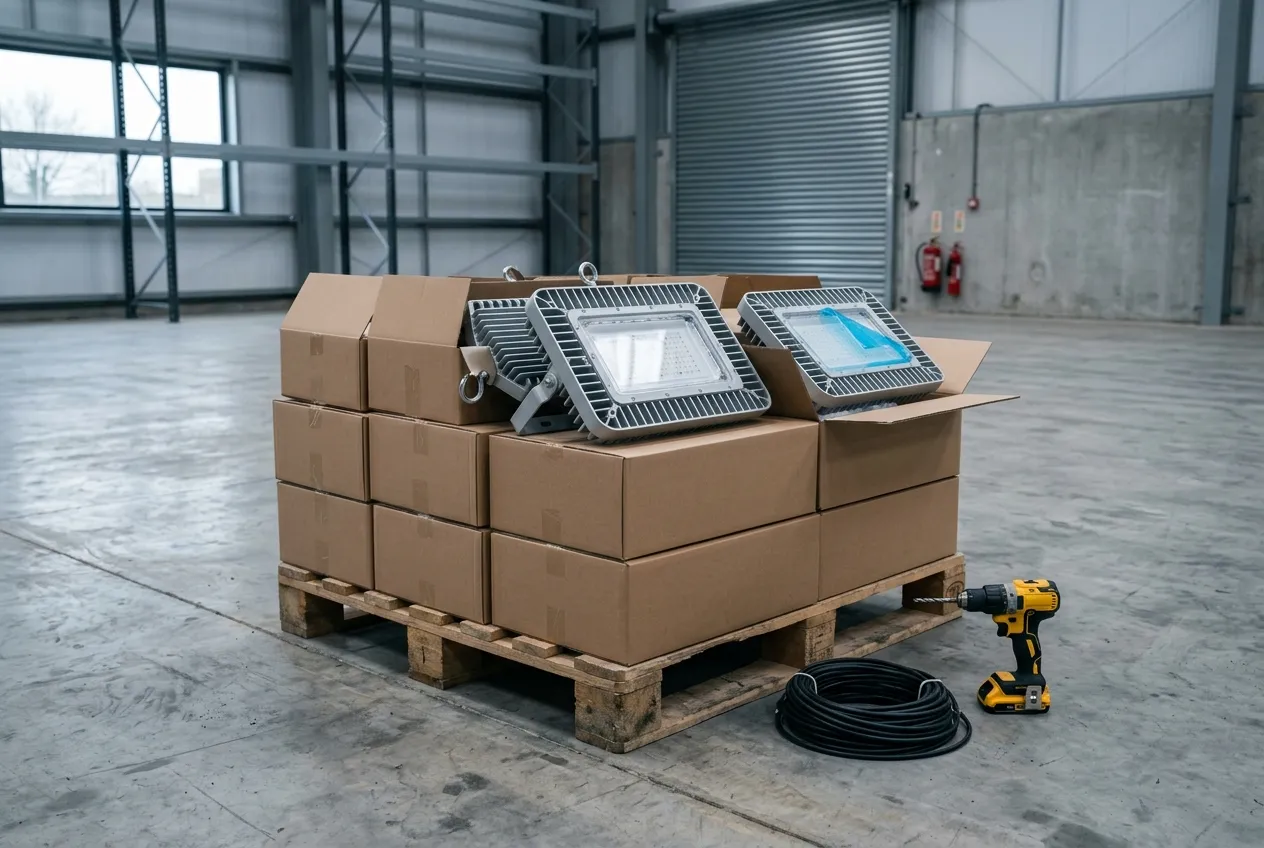
New LED high bay fittings stacked on a pallet in their packaging, ready for installation.
Illustrative image generated with AI. Not a photograph of a building we have worked on.

How to decide in one question

Ask what the work is for.

  • Reducing running cost in a building with no compliance pressure and sound existing fittings: a lamp swap is often the right commercial answer.
  • Closing a gap to a minimum rating, or preparing for a sale or a letting: replace the fittings. The cheaper route will not get you there and you will pay twice.
  • Fittings that are old, damaged, discoloured or failing: replace them regardless, because you are about to spend money on a housing that is at the end of its life.
  • Fittings that are listed, architectural or part of a designed scheme: gear tray conversion, which keeps the appearance and takes the load.

The cost question people ask backwards

The honest comparison is not lamp price against fitting price. Installed high bay fittings run at a few hundred pounds each, and a large part of that is labour and access that you pay either way — the lift, the out-of-hours working, the isolation and testing are much the same whether you are changing a lamp or a luminaire at height.

Which means the saving from choosing the cheaper option is smaller than the material cost difference suggests, particularly in a high building. In a shed at twelve metres, the access dominates and a lamp swap saves far less than it appears to.

The compatibility trap, briefly

A direct replacement lamp has to work with the control gear already in the fitting, and older magnetic and newer electronic ballasts behave differently. Some lamps need the ballast bypassed, which turns a lamp change into an electrical job and changes the economics again.

Getting it wrong produces flicker, early failure and voided warranties. Whoever quotes a lamp swap should be stating who carries that risk.

Questions we get asked

Is a lamp swap enough to improve an EPC rating?
It helps less than replacing the fitting. The assessment models the installed luminaire — its optics and control gear — not just the lamp, and an old housing wastes a good part of what a directional LED lamp produces. If compliance is the reason for the work, replace the fittings.
Does a lamp swap still save money?
Yes, genuinely. The lamp draws less power and the meter notices. That is why the decision is awkward: the bill and the certificate move by different amounts, and which matters depends on why you are doing the work.
What is a gear tray conversion?
The internal components of the fitting are replaced while the housing stays in place. It costs more than a lamp swap and less than a new fitting, and it is the usual answer where the fitting is architectural, listed or part of a designed ceiling.
Why is the saving smaller than the price difference suggests?
Because a large part of the cost is access and labour that you pay either way. At height, the lift and the out-of-hours working dominate, so choosing the cheaper option saves less than the difference in material cost implies. Installed fittings run at a few hundred pounds each.

Last updated .

Next step

Find out what your building actually needs

Tell us the building type, the floor area and the rating you are on now. One commercial contractor comes back to you with a quote. No panel, no cold calls.

Or call 07367 293494. Monday to Friday, 9am to 5.30pm.

A+ A B REQUIRED C D THIS BUILDING E F G
Call Get a quote