Commercial solar

Commercial solar PV and your EPC rating

Solar is the measure that most often gets raised in the same conversation as lighting, usually because a landlord has a large flat roof and has been told it is an asset. It can move a non-domestic rating and it can cut a bill substantially. It is also a far larger commitment than lighting, with a structural question attached, and the order in which you do the two matters.

Moves the rating and the bill, higher capital
A+ A B REQUIRED C D THIS BUILDING E F G
Band letters as they appear on a non-domestic certificate. Your own bands are on your EPC.

Why lighting usually goes first

Generating your own electricity is worth more when the building needs less of it. Cut the lighting load first and you may need a smaller array for the same outcome, which makes the solar cheaper rather than merely later. Doing it the other way round means sizing an array against a load you are about to reduce.

There is a second reason, which is simply that lighting is the shorter payback and the smaller cheque. Starting there gets a result on the certificate while the solar decision is still being worked through.

The questions that decide whether a roof works

  • Structural capacity. The roof has to carry the array, and on older industrial buildings that is a genuine question rather than a formality.
  • Remaining roof life. Putting an array on a covering with a few years left in it means paying to remove and refit it.
  • What you use on site. Solar is worth most where the building consumes the generation itself rather than exporting it, which favours buildings operating in daylight hours.
  • Lease structure. On a let building, who pays for the array and who gets the benefit of the electricity is a commercial question that needs settling before anything is specified.
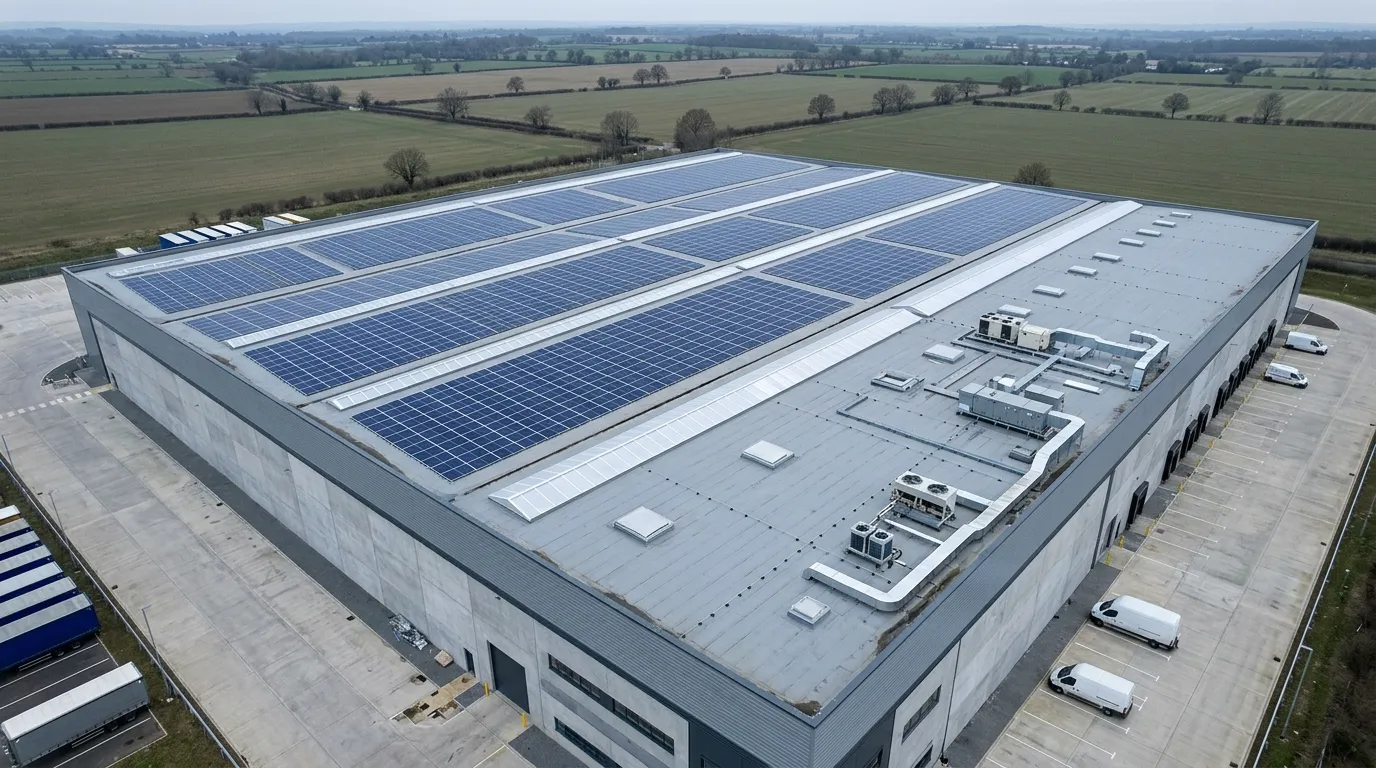
An aerial view of a solar array covering part of the flat roof of a large commercial building.
Illustrative image generated with AI. Not a photograph of a building we have worked on.

Battery storage and EV charging

Both come up alongside solar and both are separate decisions. Storage makes sense where generation and demand do not line up in time. EV charging is driven by a different question entirely — the vehicles using the site — and has its own electrical supply implications that are worth establishing early, because an upgraded incoming supply changes the economics of everything else on this list.

Questions we get asked

Does solar count towards a commercial EPC rating?
On-site renewable generation is taken into account in the assessment of a non-domestic building, so it can improve the rating. How much depends on the size of the array relative to the building and how the building is modelled.
Should I do solar or lighting first?
Lighting, in almost every case. It is cheaper, quicker and reduces the load the array would otherwise have to cover, which can mean a smaller and cheaper array later.
My roof is leased to a tenant. Can I still do this?
It depends entirely on the lease and on what the roof and the airspace are demised as. This is a legal question before it is a technical one, and it is worth answering before anyone surveys the roof.

Last updated .

Next step

Get commercial solar priced for your building

Tell us the building type, the floor area and the rating you are on now. One commercial contractor comes back to you with a quote off a survey.

Or call 07367 293494. Monday to Friday, 9am to 5.30pm.

A+ A B REQUIRED C D THIS BUILDING E F G
Call Get a quote