Gyms and leisure centres

Leisure centre EPC upgrades: pools and ventilation

A wet leisure building is really two buildings. The dry side behaves like any other commercial space. The pool hall does not: it has to be ventilated and dehumidified continuously, not for comfort but to stop warm chlorinated moisture destroying the structure around it. That load dominates everything, and it never switches off.

A+ A B REQUIRED C D THIS BUILDING E F G
Band letters as they appear on a non-domestic certificate. Your own bands are on your EPC.

The operator, often a trust or a local authority contract, with the pool plant on its own replacement cycle.

The pool hall runs to protect the building

Warm, humid, chlorinated air attacks steel, finishes and fabric. The ventilation and dehumidification plant exists to prevent that, which means it runs when the pool is closed, overnight, and through the quiet season. You cannot schedule it away the way you can schedule lighting.

That makes heat recovery, pool covers, water temperature set points and the age of the air handling plant the measures that actually matter. Lighting is a rounding error next to them, which is unusual on this site and worth saying plainly.

What the environment does to fittings

Chlorine and humidity are hostile to light fittings and to their fixings. Standard commercial fittings corrode, and a failed fitting over water is a very expensive thing to replace because of the access.

  • Corrosion-resistant housings and stainless or composite fixings, specified for a chlorinated atmosphere.
  • Appropriate ingress protection, and fittings rated for the zone they sit in above water.
  • Serviceability from a gantry or with the pool drained, because the access cost dominates the fitting cost.
  • Low glare and good colour rendering, because lifeguards must be able to see the pool floor.

That last one is a safety requirement before it is an efficiency question, and it caps how far the specification can be value-engineered.

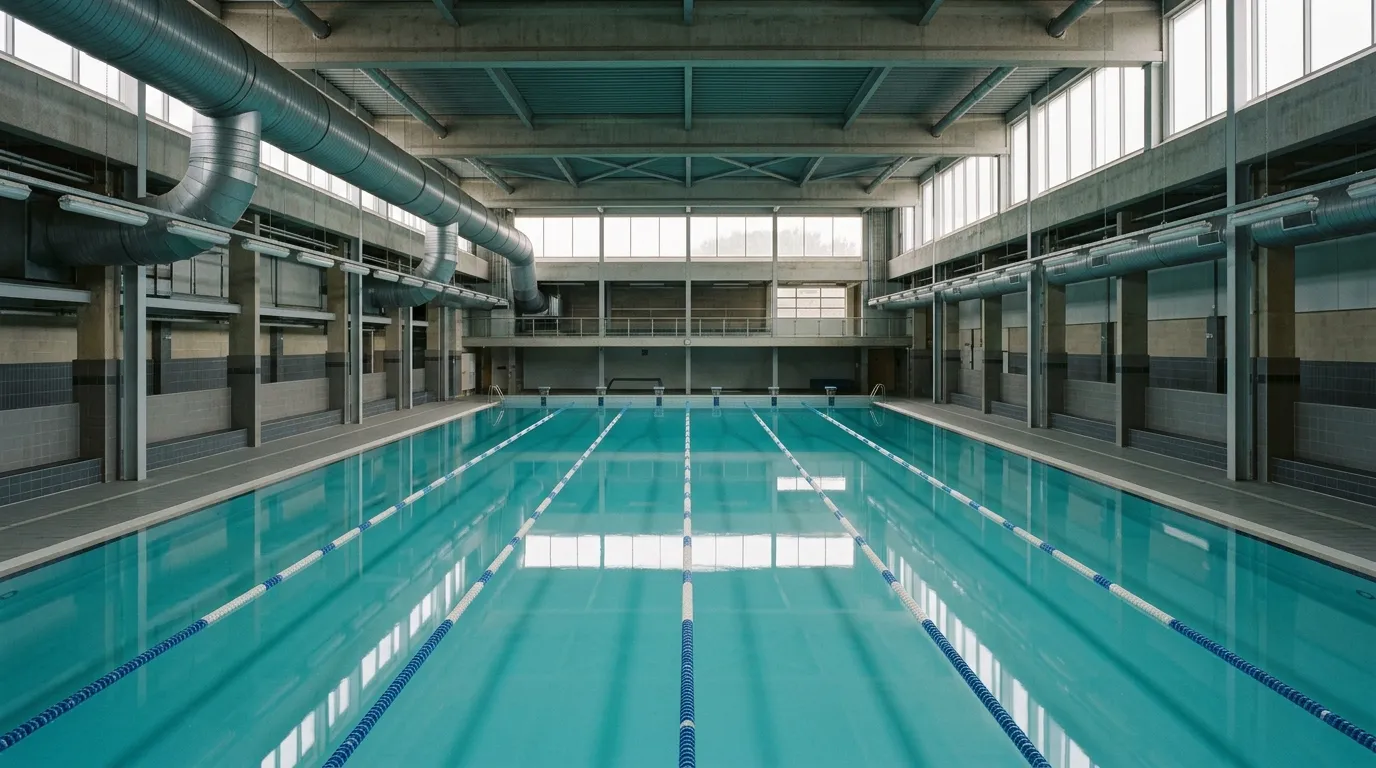
An empty indoor swimming pool hall with still water, a high ceiling and large ventilation ducts.
Illustrative image generated with AI. Not a photograph of a building we have worked on.

A dry gym is a completely different building

Take the pool away and the picture inverts. A dry gym is long-hours, high-occupancy, well-lit space with significant ventilation but none of the humidity problem. Lighting hours are long, which makes lighting payback fast, and the fittings face nothing worse than a sports hall ball strike.

If you operate both, treat them as two projects with two business cases rather than one leisure programme.

Opening hours are the other distinctive thing

Leisure runs early and late, often five in the morning until ten at night, seven days. Long operating hours shorten the payback on anything that saves per hour of use, which is most lighting measures, and they also narrow the window for doing the work.

Questions we get asked

What is the biggest energy cost in a leisure centre?
In a wet centre, ventilation and dehumidification of the pool hall, followed by pool water heating. Both run continuously to protect the building fabric rather than only when the pool is in use, so they cannot simply be scheduled down.
Can we use normal LED fittings over a pool?
No. A chlorinated, humid atmosphere corrodes standard housings and fixings, and replacing a failed fitting over water is expensive because of the access. Fittings need to be specified for the zone, with corrosion-resistant fixings.
Is a gym without a pool the same project?
Not at all. Remove the pool and the humidity and dehumidification problem goes with it. A dry gym is long-hours, high-occupancy space where lighting pays back quickly, which is the opposite conclusion.

Last updated .

Next step

Get a quote for your gyms and leisure centre

One commercial contractor, quoting off a survey of the actual building rather than a rate per square foot over the phone.

Or call 07367 293494. Monday to Friday, 9am to 5.30pm.

A+ A B REQUIRED C D THIS BUILDING E F G
Call Get a quote