Hotels

Hotel EPC upgrades: bedrooms, occupancy and guest experience

A hotel is a building made of small independently controlled zones, most of which are unoccupied most of the time. Heating, cooling and lighting a sold room for twenty-four hours when the guest is in it for eight is where the waste sits, and no amount of efficient fittings fixes a control problem.

A+ A B REQUIRED C D THIS BUILDING E F G
Band letters as they appear on a non-domestic certificate. Your own bands are on your EPC.

The operator, with the brand standard sitting over them and dictating what a room may look like.

The saving is occupancy-linked, not fitting-linked

An efficient fitting in a room nobody is in still wastes everything it draws. The distinctive measure in a hotel is linking room services to whether the room is sold and whether the guest is currently in it: key card or occupancy-linked power, setback temperatures on unsold rooms, and a housekeeping routine that does not leave everything running.

This is why hotels often get a better return from controls and building management than from relamping, which inverts the usual order on this site.

Back of house is where the plant is

Guest-facing space is constrained by brand standards and by what a guest will tolerate. Back of house is not. Kitchens, laundry, plant rooms, corridors, car parks and plantrooms run long hours, nobody is photographing them, and the equipment is frequently older than anything a guest sees.

That makes back of house the natural starting point: it is unconstrained, the hours are long, and the work does not interrupt trading.

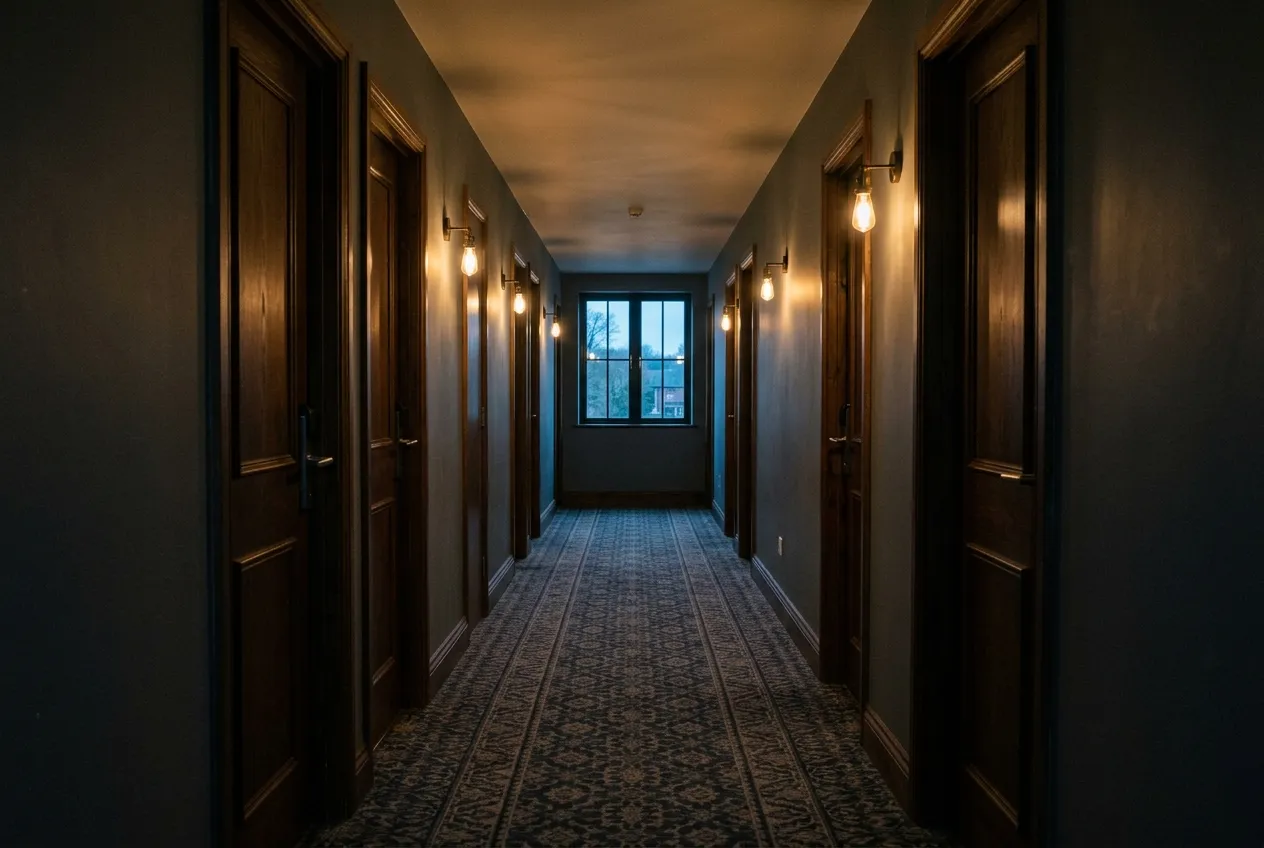
An empty hotel bedroom corridor with warm low-level lighting and a long run of doors.
Illustrative image generated with AI. Not a photograph of a building we have worked on.

Where guest experience caps the options

Lighting in a hotel is atmosphere, and atmosphere is part of what is being sold. Replacing warm, low-level, carefully designed lighting with efficient cool fittings will save energy and damage the product. Brand standards often make it impossible anyway.

The workable version is matching colour temperature and dimming behaviour exactly, and treating the lighting design as fixed while the technology behind it changes. Expect to pay more per fitting than an office would and to need samples signed off.

Refurbishment cycles are the opportunity

Hotels refurbish on a cycle, floor by floor, and a floor out of service is the cheapest moment to do anything. A programme that waits for the refurbishment cycle costs a fraction of one that interrupts trading, and the capital is already being spent.

If a refurbishment is scheduled, that is the conversation to be having now rather than afterwards.

Questions we get asked

What saves most energy in a hotel?
Linking room services to occupancy, rather than replacing fittings. A room that is unsold or unoccupied should not be fully heated, cooled and powered, and that is a controls question rather than an efficiency-of-fitting question.
Will guests notice an energy upgrade?
They will if you change the lighting character of guest space. Colour temperature and dimming behaviour are part of the product and usually part of a brand standard. Back of house has none of those constraints, which is why it comes first.
When is the cheapest time to do the work?
During a scheduled refurbishment, floor by floor. The rooms are already out of service and the capital is already committed, so the marginal cost of doing the energy work at the same time is far lower.

Last updated .

Next step

Get a quote for your hotel

One commercial contractor, quoting off a survey of the actual building rather than a rate per square foot over the phone.

Or call 07367 293494. Monday to Friday, 9am to 5.30pm.

A+ A B REQUIRED C D THIS BUILDING E F G
Call Get a quote