LED against fluorescent

LED against fluorescent: what actually drives the saving

The question people ask is which fitting uses less power. The question that decides the answer is how many hours it is on. A saving per hour is worth very little in a building lit for six hours a day and a great deal in one lit continuously, which is why payback figures quoted without the hours behind them are close to meaningless. Payback is around a year under continuous operation, and longer on shorter hours.
A+ A B REQUIRED C D THIS BUILDING E F G
Band letters as they appear on a non-domestic certificate. Your own bands are on your EPC.

Where a payback figure comes from

Four numbers: the power difference between old and new, the number of hours the lighting runs, the price you pay per unit of electricity, and the installed cost of the change. Alter any one and the answer moves, sometimes dramatically.

Operating hours are the one that varies most between buildings, and the one most often left unstated. A quote claiming a two-year payback has assumed a number of hours. Ask which, and check it against your building rather than against the industry average it probably came from.

The same fittings, two buildings

Consider the identical upgrade in two buildings. An office lit from eight until six on weekdays runs its lighting roughly two and a half thousand hours a year. A distribution building running two shifts six days a week runs perhaps twice that, and a continuous operation more again.

The energy saved per hour is the same in both. The annual saving is not, and neither is the payback. The warehouse case is strong on numbers the office case simply cannot reach, and that is before any of the other differences between those buildings.

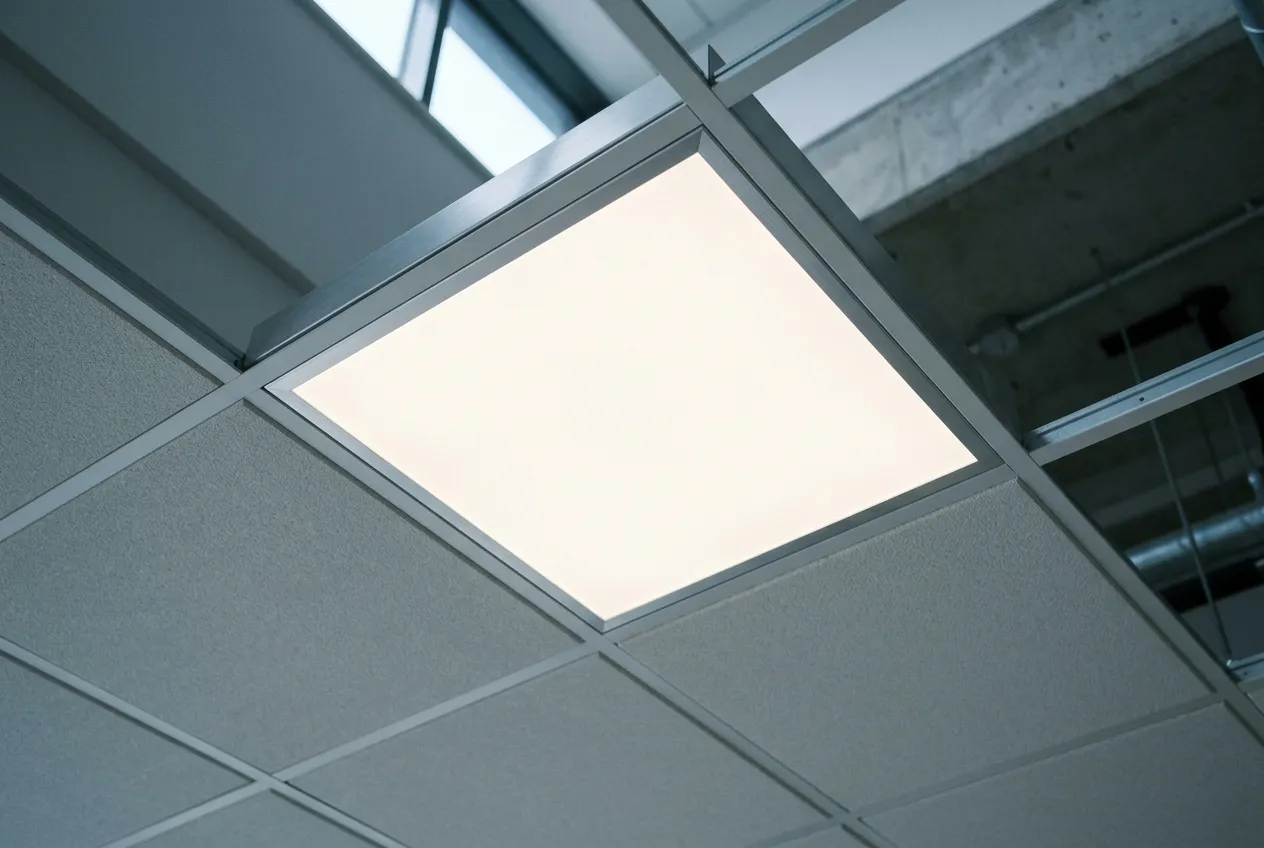
A close view of a modern recessed LED panel lit in a suspended office ceiling grid.
Illustrative image generated with AI. Not a photograph of a building we have worked on.

What else is in the comparison and usually left out

  • Lamp replacement labour. Fluorescent tubes fail and get replaced, repeatedly, often at height. That recurring cost disappears with LED and rarely appears in the comparison.
  • Disposal. Fluorescent tubes contain mercury and are hazardous waste, with a cost attached each time.
  • Cooling. In an air-conditioned building, lighting heat is removed at further cost, so the saving is larger than the lighting bill alone.
  • Light quality and light levels. A like-for-like wattage comparison ignores whether the space ends up better lit, which is usually the point of doing it.
  • Availability. The lamp types are being withdrawn in phases, so part of the comparison is against a future where replacements are harder to source.

Where the honest answer is "not yet"

A building lit a few hours a day, with sound recent fittings and no compliance pressure, has a long payback and no particular reason to hurry. Saying so is more useful than producing a business case that only works on optimistic hours.

The reasons to move anyway are a compliance deadline, a refurbishment that makes the access free, or fittings approaching end of life. Absent all three, a short-hours building can reasonably wait.

Questions we get asked

How much cheaper is LED than fluorescent to run?
Lighting energy typically falls by a substantial margin, commonly more than half on replacement, but the saving in money depends on how many hours the lighting runs, what you pay per unit, and what it cost to install. The hours are the variable that differs most between buildings and the one most often left unstated.
What payback should I expect?
Around a year under continuous operation, and longer on shorter hours. Operating hours decide it. Any payback figure that does not say how many hours a year it assumed is not telling you much. Ask, then check that number against your building.
What gets left out of the comparison?
Usually the recurring cost of replacing failed tubes and the labour to do it at height, hazardous waste disposal, and in an air-conditioned building the cooling needed to remove lighting heat. All of them favour LED and none of them appear in a wattage comparison.
Is there a case for waiting?
In a building lit only a few hours a day, with sound recent fittings and no compliance pressure, yes. The things that change that are a deadline, a refurbishment that makes access free, or fittings reaching end of life.

Last updated .

Next step

Find out what your building actually needs

Tell us the building type, the floor area and the rating you are on now. One commercial contractor comes back to you with a quote. No panel, no cold calls.

Or call 07367 293494. Monday to Friday, 9am to 5.30pm.

A+ A B REQUIRED C D THIS BUILDING E F G
Call Get a quote